National Field of Honour
Speaker: Richard Gratton
When: Thursday, March 21, 2024, 19:30 to 21:00
Where: Centennial Hall,
288, Beaconsfield Boulevard, Beaconsfield, H9W 4A4
Lecture in English (Bilingual Visual), followed by a bilingual question period
In December 1908 two policemen find a homeless man huddled in a doorway of downtown Montreal suffering from hypothermia and malnutrition who had served the Empire for more than 20 years, the man was Trooper Daly.
The head orderly of the Montreal General Hospital, Arthur Hair raised money from friends and colleagues to give the soldier a decent and dignified funeral. This was the catalyst for the creation of the Last Post Fund in Montreal, in April 1909. Trooper Daly was the first of nearly 150,000 servicemen and women for whom the Last Post Fund has provided benefits over the past century. 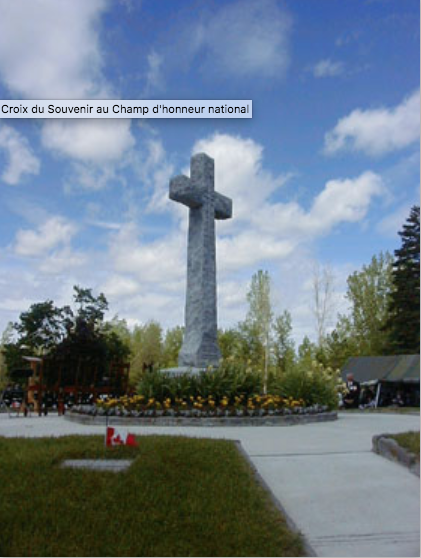 More than 22,000 Veterans and their close ones are now resting in our community at the intersection of Beaconsfield, Kirkland and Pointe-Claire in one of the ‘’ British Empire most beautiful cemeteries’’ called the National Field of Honour, a Canadian Historic Site.
Come hear about the history and the important contribution of the Last Post Fund to Canada and beyond its borders.
Major retired Richard Gratton, CD, resident of Beaconsfield, served more than 25 years with the Canadian Armed Forces as an artillery officer and is the instigator of Heroes Park in Beaconsfield and contributed to the Trans-Canada Respect Monument following his service to Afghanistan.
===========================================================
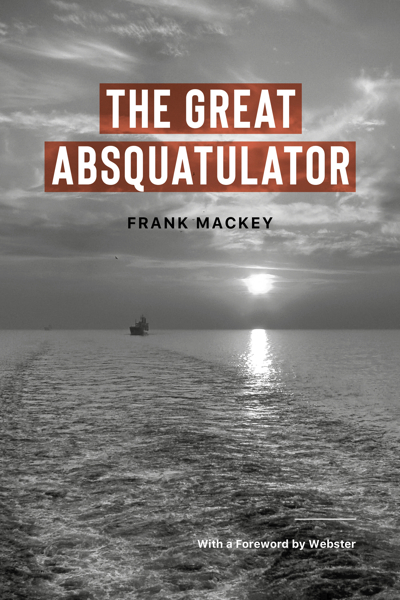
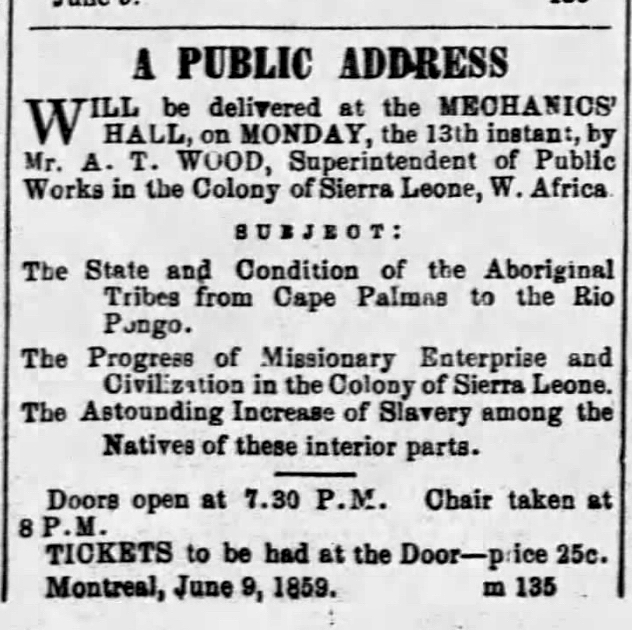 In this presentation, Frank Mackey talks about the genesis of his book “The Great Absquatulator", the combination of accidents that led him to write and publish it.
 Aly Ndiaye, a.k.a. Webster, hip-hop artist, independent historian, activist and lecturer, was born and raised in the Limoilou district of Québec City. His father is Senegalese and his mother is from Quebec. He has always been proud of his origins and describes himself as a SénéQueb métis pure laine. His passion for history led him to pursue university studies in this field; he holds a bachelor's degree in history from Université Laval. He worked for 10 years as history guide for Parks Canada. He is passionate about the history of the Afro-descendant presence and slavery in Quebec and Canada since the time of New France. Ndiaye is the author, amongst others, of a children's book that follows the journey of Olivier Le Jeune, the first African slave in Canada, Le Grain de Sable (Septentrion, 2019). In February 2023, he was appointed to represent Québec at the Historic Sites and Monuments Board of Canada.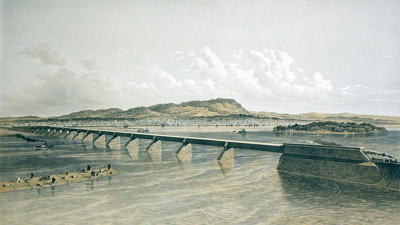
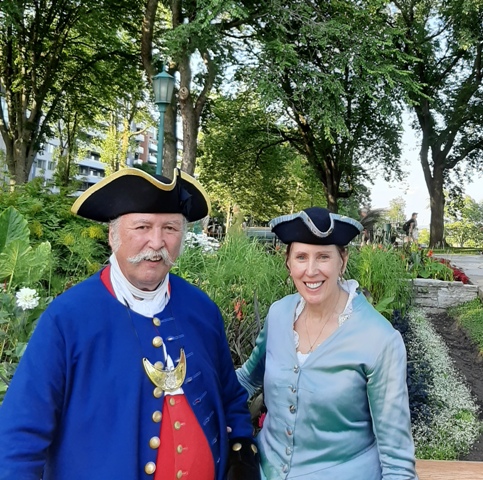 ar, the American War of Independence and the French Revolution. He became an engineer in 1753 in the wake of the commission of inquiry into the construction of the ramparts of Quebec. In 1763 he owned 7 seigneuries, 5 in the new Province of Quebec: Lotbinière, Vaudreuil, Rigaud, Nouvelle-Beauce and Villechauve and two in the Province of New York. He participated in London in the debate on the Quebec Act where he convinced the British parliament to adopt the French Law (Coutume de Paris), the French language and the Catholic religion, which today makes the Province of Quebec a distinct society.
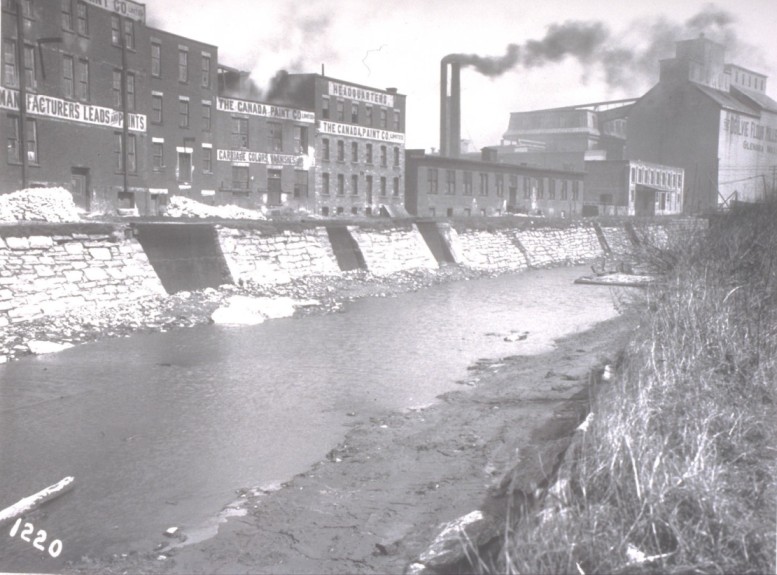 The Lachine Canal was the birthplace of Canada’s industrial revolution. Once the most heavily industrialized urban area in the country, the area deindustrialized during the 1970s and 1980s. The canal was also closed in 1970. As a result, the debate over the future of the Lachine Canal unfolded at a time of social crisis for the adjoining neighbourhoods. This illustrated talk is drawn from the author’s recently published book “Deindustrializing Montreal: Entangled Histories of Race, Residence and Class”, which was awarded the "Prix de la présidence de l’Assemblée nationale du Québec" 2023, recognizing political books.
 Steven High is a professor of history at Concordia University where he co-founded the Centre for Oral History and Digital Storytelling. He is the author of many books and articles about the history of Montreal.
 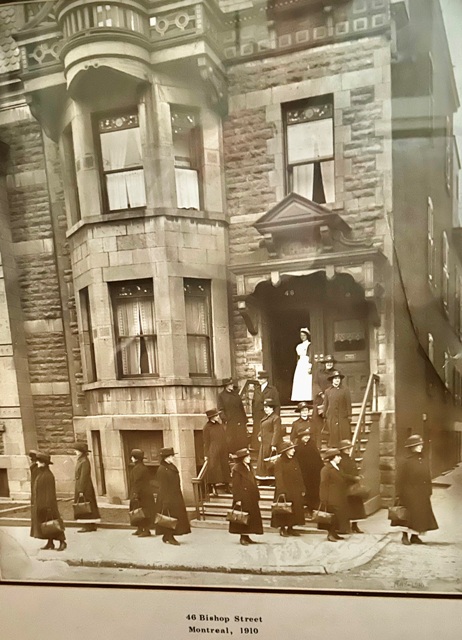 The Victorian Order of Nurses (VON) was founded in 1897 by Lady Aberdeen, consort to the then Governor General of Canada, Earl of Aberdeen (1893-1898). We will see how the VON played a part in Canada's history from the Klondike Gold Rush, the Halifax Explosion and two World Wars. In later years, we witnessed VON's decreased importance as a national institution, which gave birth to our own NOVA West Island.
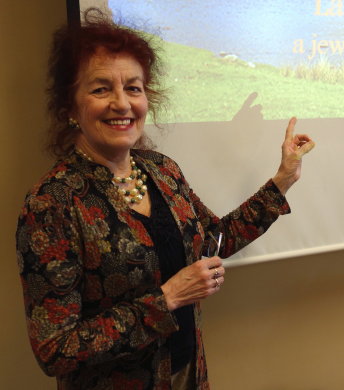 When: Thursday, April 20, 2023, 19h30 à 21h
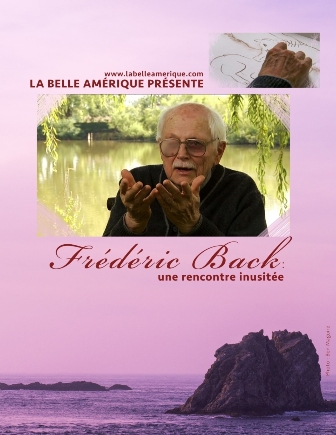 Hélène Jasmin introduces Frédéric Back, artist and environmentalist, creator of « Crac » and « The man who planted trees » winner of two Oscars, Chevalier de l’Ordre du Québec and … friend. And a few words on Lina Gagnon, animation artist and resident of Beaconsfield until her death in 2022, and her work with Frédéric Back.
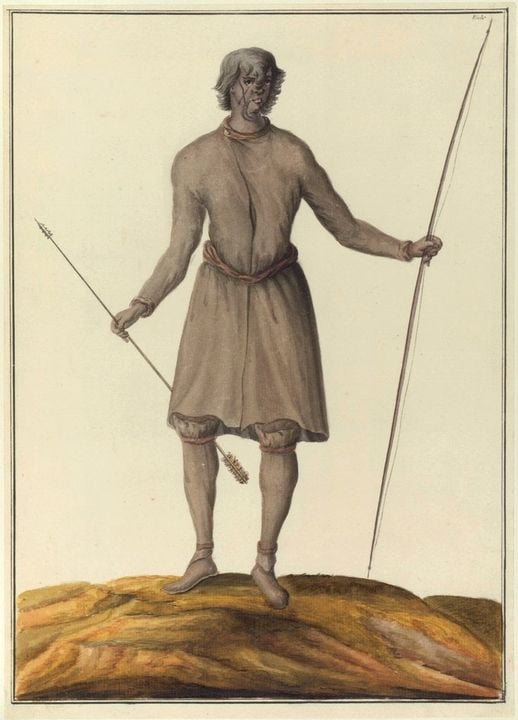 Around 1690, French Canadians saw an almost constant arrival of Indigenous and African enslaved in the Laurentian Valley until 1833. However, we still know very little about their living conditions. This lecture will present what we currently know about enslaved individuals' living conditions and the conditions that led to early mortality.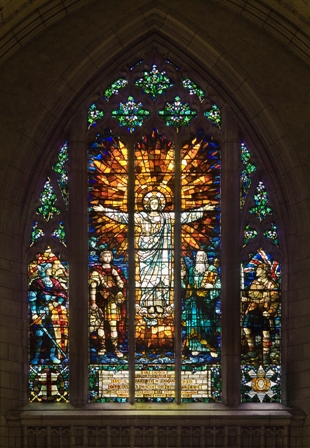
 Learn more about the modest McLennan family who gifted the Window to the Church and so much more to Montreal and Canada.
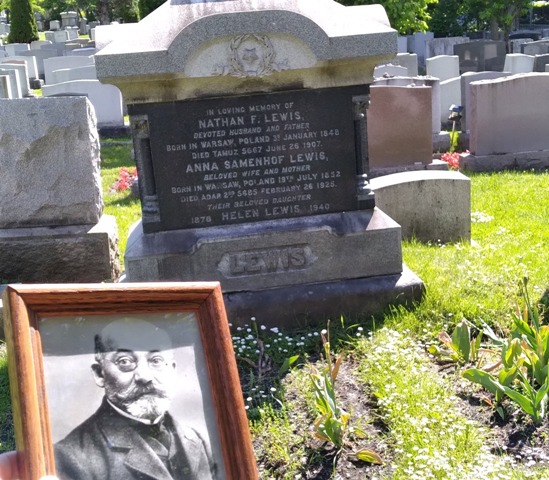 In 1910 L.L. Zamenhof, the creator of Esperanto, had his first and only trip outside Europe: to visit the International Congress of Esperanto in Washington, DC. But what very few people know also is that not only did he visit Washington, DC, but also Montreal and -- yes! -- Beaconsfield! Why Beaconsfield? Because some of his close relatives immigrated to Montreal in the 1880s and also had their summer residence in Beaurepaire - Beaconsfield. Yevgeniya will tell us all that is to know about the lost -- and found -- Zamenhofs of Canada.
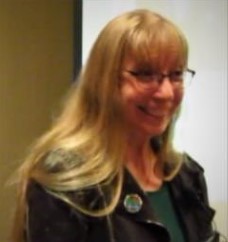 Yevgeniya Amis speaks Esperanto every day with her husband Joel. She is a former editor of a socio-cultural magazine in Esperanto (Kontakto). She premiered recently as a playwright and producer of the play "1910" -- a "firsthand" story about Zamenhof's visit to Montreal that was put on stage during the