My Experiences of Expo 67
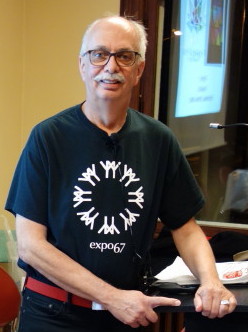 Guest Speaker: Gary W. Sims
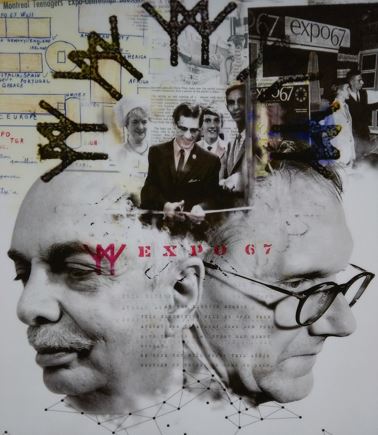
When: Thursday, October 19, 2017, from 7:30 p.m. to 9 p.m.
Where: Centennial Hall
288 Beaconsfield Blvd, Beaconsfield, H9W 4A4
Lecture in English followed by a bilingual question period.
Our guest speaker will talk about his experiences on Centennial Events and his experiences leading up to the opening and closing of Expo 67 and afterwards.
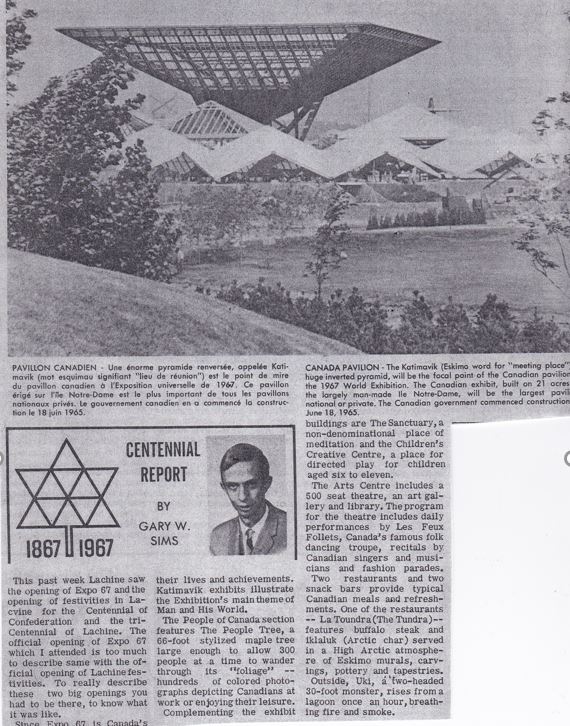
Gary W. Sims started collecting Centennial & Expo 67 items in 1964. He put on small exhibitions at neighbours and friends house on different countries. He volunteered at the Lachine Museum, and then in 1966 at the museum, put on an Exhibition on the Centennial and Expo 67 its crown jewel. Gary was appointed by the City of Lachine in 1967 as a Director of Lachine 67 which coordinated Centennial Events and the 300th anniversary of the founding of the City of Lachine. He wrote a weekly column on Centennial Events called Centennial Report in the Lachine Messenger. As a Director of Lachine 67 and writing the newspaper column, Expo 67 Incorporated gave Gary a special press pass that allowed him complete access to the site. During this time he met many heads of state and other celebrities. With this pass he was given V.I.P and press packages as he visited each pavilion on the Expo site as well as many other special items which he has preserved and saved over the last 50 years. Gary considers this time of his life the most exciting. The privileges he was given in 1967 were never taken for granted and will never be forgotten.
================================================
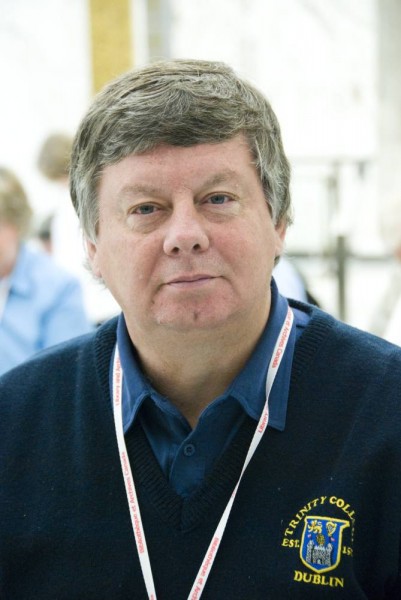
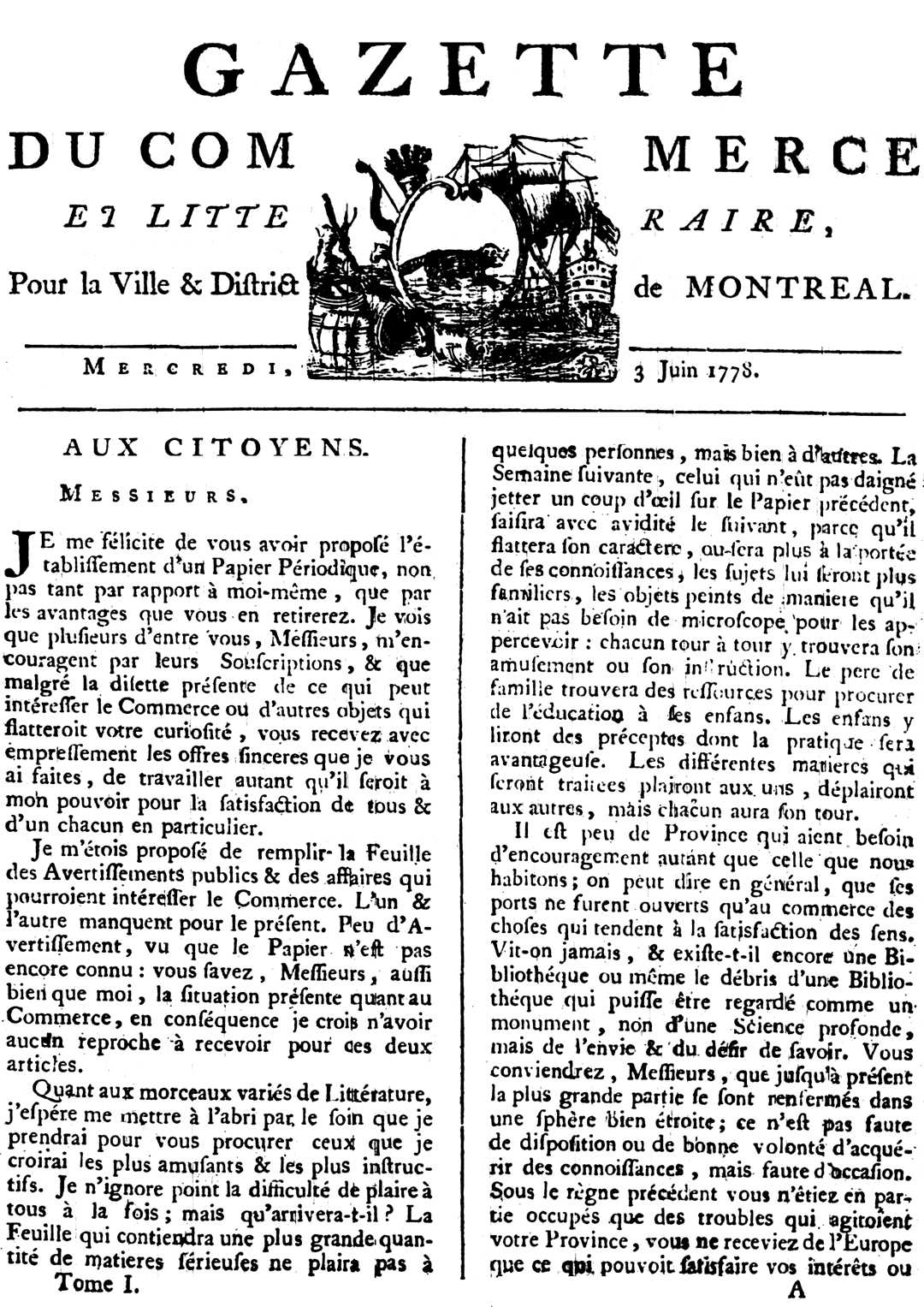 Born in Marseilles, educated in Lyon, the printer Fleury Mesplet (1734-1794) one day decides to flee the intolerance that reigns in France at that time to seek refuge in England. He meets Benjamin Franklin, who recruits him as a Francophone printer of the American Continental Congress, fighting against the English. He prints the Letters sent by the American Congressmen to the inhabitants of the Province of Quebec to incite them to join against their common enemy: the English. In order to reinforce this purpose, Franklin arrives in Montreal in 1776; Mesplet accompanies him: he shall be the instrument of the North American rebellion against the European oppressor. But the project fails; the American patriots are decimated by the English. However, Mesplet decides to remain in Montreal, despite a “preventive” imprisonment of almost a month. With the aid of a few friends as enlightened as he was by the philosophy of the Enlightenment (Valentin Jautard, Pierre du Calvet, etc.), he founds in 1778 the first journal of opinion in the country, the Gazette littéraire, and the first think tank, the Montreal Academy - which perhaps hides a French Masonic lodge. After another hard imprisonment of three years, Mesplet recovers his wife, his friends, his workshop, his values and his fights; he creates in 1785, on a new basis, a second newspaper, the Montreal Gazette, which survives him even today. Beyond the centuries, between the American War of Independence and the French Revolution, Mesplet’s story reminds us that the struggle for freedom of expression is still valid.
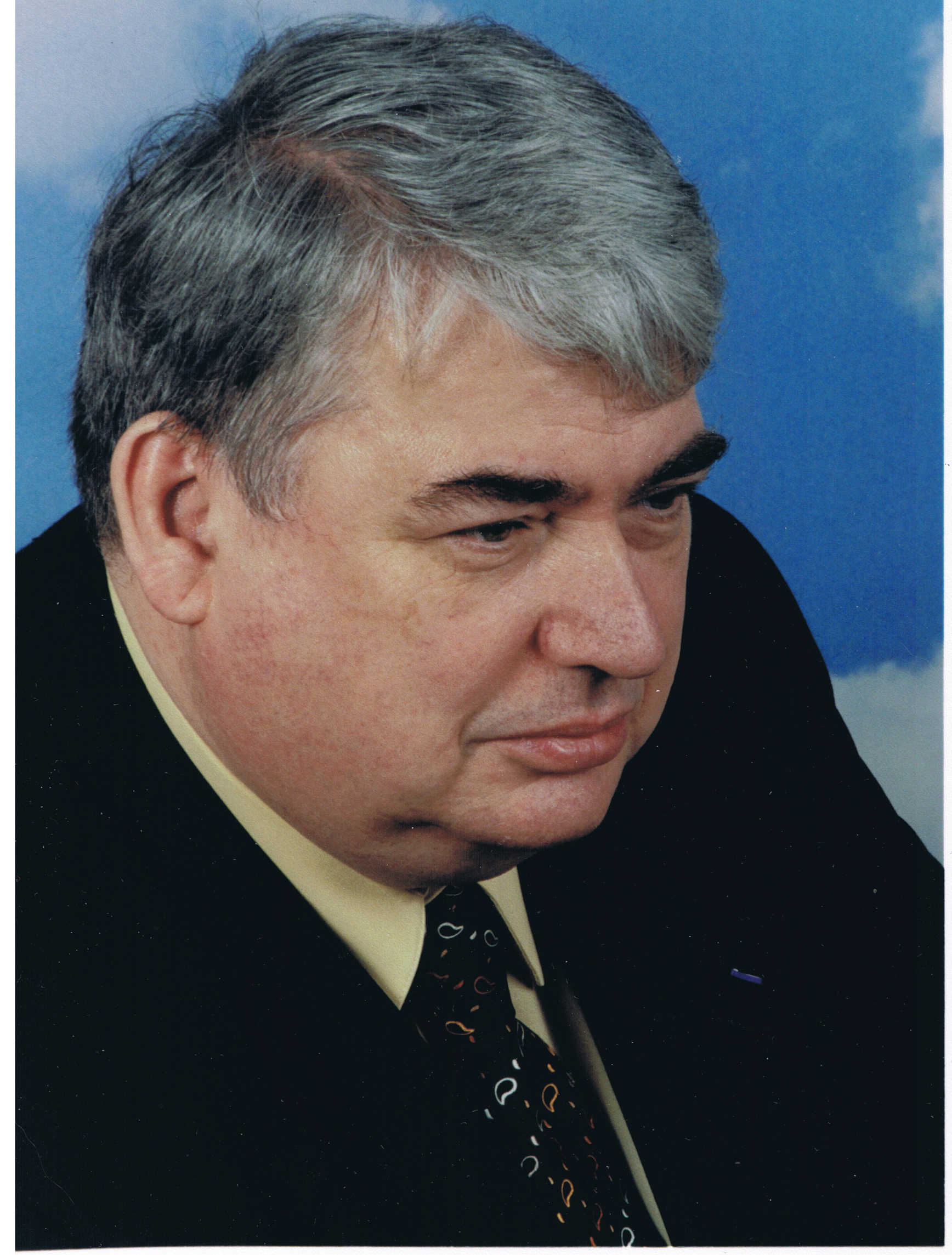 Born in Spa (Belgium) in 1948, Jacques G. Ruelland immigrated to Canada in 1969, holding a printer technician diploma from Liège (Belgium). He holds presently a BA and an MA in philosophy of science, a second MA in history, a third one in museology and a Ph.D. in history of science. He taught philosophy at the Collège Édouard-Montpetit (Longueuil) for 31 years (1979-2010), and he currently teaches history as an associate professor in the History Department of the University of Montreal. He also works currently as a museologist for the Musée des Maîtres et Artisans du Québec (Saint-Laurent), and the Museums (a set of five museums) of Mont-Saint-Hilaire. He signed some fifty books published in Canada, the United States, Europe, and Asia, and translated into various languages.
 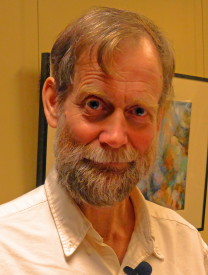 Guest speaker: Adrian Willison
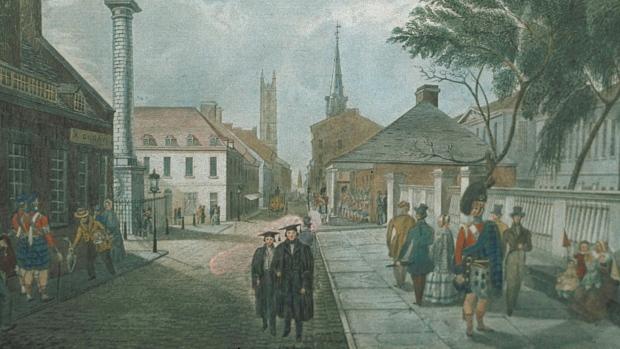 Port Royal. Amy gave the Roddick Gates at McGill, in memory of her husband, a Newfoundlan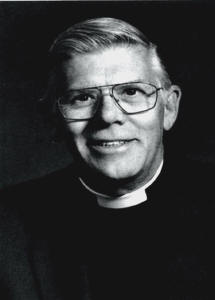
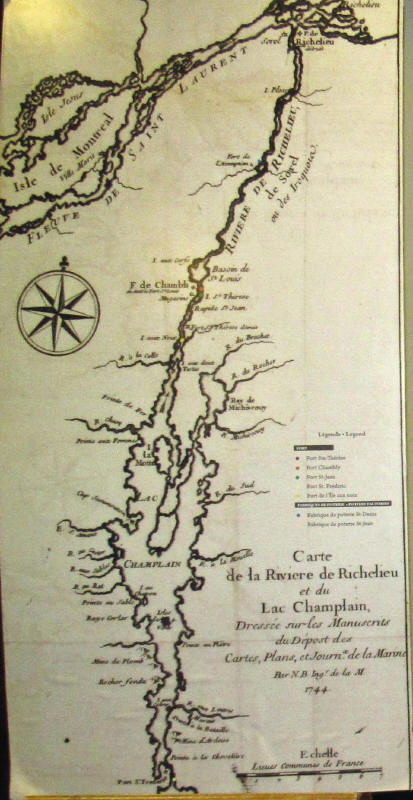
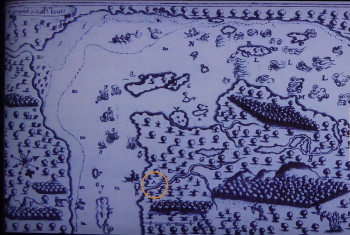 In 1609 and 1611, Samuel de Champlain visited the sites of today's Kahnawake and Montréal (marking the latter with an A on his 1612 map). Here he had to portage around “Sault Saint-Louis”, the Lachine Rapids, noting their importance to the natives gathering to parlay and trade, the former diplomatic function commemorated in the Iroquoian name Tiohtiagi, and the latter commerce still a hallmark of Montréal's importance at the start of the St. Lawrence Seaway.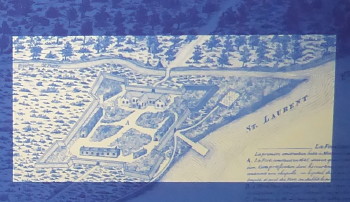
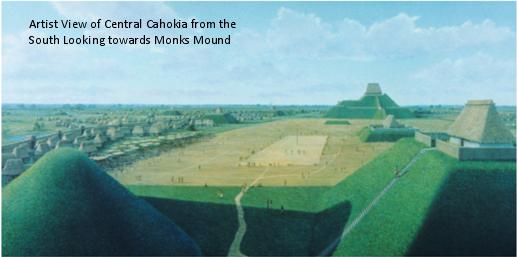
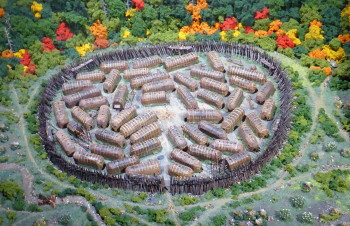
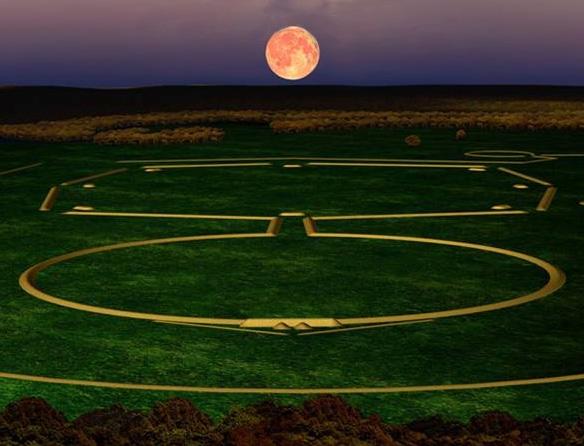 We now know that the earthwork tradition is very ancient in this region but that it particularly exploded during two periods. The first explosion occurred about 100 BC and continued to about 400 BC, contemporaneous with the Mediterranean Roman Empire, and the second occurred about 1000 AD and terminated about 1400 AD, paralleling the European Middle Ages. European scholars and archaeologists have proposed many theories about the societies and histories that were responsible for building and using these great earthworks. Many of them are currently rejected by most North American archaeologists and referred to collectively as the Mound Builder mythology.
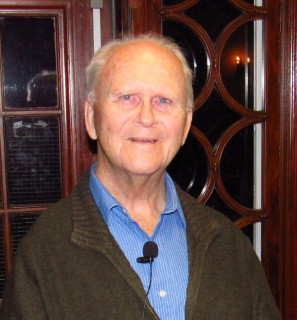 Martin Byers was born in Fort William, now Thunderbay, Ontario in 1937 but grew up in Montreal. He graduated from McGill, BA and MA in history/anthropology, gained a PhD in anthropology/archaeology from New York State University at Albany (New York). He taught anthropology and humanities at Vanier College, Montreal, from 1970 to 1998. Martin Byers is a research associate in the Department of Anthropology at McGill University in Montreal, Quebec, Canada. He has authored numerous articles in scholarly journals and has published 3 books.